
"Arabica coffee environment"
6000 article(s) found
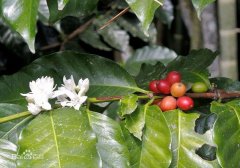
Income of coffee farmers grown in shade coffee tree Arabica coffee beans
First of all, there are some reasons why shade planting has become an advantage. When coffee is planted in the shade of other vegetation, biodiversity provides favorable conditions for its growth. Native plants that provide shade for coffee range from forest plants such as cedar to fruit trees such as banana, orange, lemon, avocado and litchi.
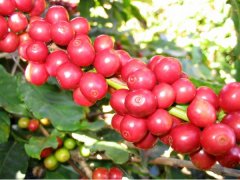
Analysis of Ethiopian Beans and Distinction between Characteristic Flavor and Growing Environment
Professional barista exchanges, please pay attention to coffee workshop (Weixin Official Accounts cafe_style) Ethiopia related recommendations Sidamo Guji sun IMPCT public welfare joint light baking, fruity, berry aroma, around the nose sweet and sour, all the proceeds donated to IMPCT social cause preschool education fund Ye Jia Xue Fei Hai La Si Ke Chi sun light baking, lemon, citrus, tea, roasted sweet potato, this

Introduction of Arabica coffee VS Robusta coffee
Arabica species VS Robusta species as a crop, tree species and planting environment are the basic factors for the good ring of coffee beans. At present, the coffee beans in circulation in the coffee market are Arabica (Coffea Arabica) or Robusta (Coffea Robusta). Generally speaking, Arabica coffee trees have fragile vitality and low resistance to diseases and insect pests.

Mexican Coffee Coffee growing Environment and Coffee Flavor
Although Mexican coffee beans are grown at low latitudes, only less than 40% of coffee beans are grown at high elevations, most of them on flat land, so even though most of the coffee beans are Arabica, commercial beans still account for the majority of production. Mexico's coffee beans are concentrated in several provinces: Oaxaca
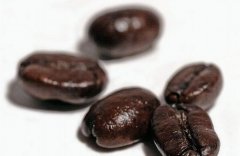
Introduction of Arabica coffee VS Robusta coffee
Arabica species VS Robusta species as a crop, tree species and planting environment are the basic factors for the good ring of coffee beans. At present, the coffee beans in circulation in the coffee market are Arabica (Coffea Arabica) or Robusta (Coffea Robusta). Generally speaking, Arabica coffee trees have fragile vitality and low resistance to diseases and insect pests.

Colombia coffee varieties Arabica coffee small fruit coffee Introduction
Growing Environment Colombia's favorable climate provides a true natural pasture for coffee. Coffee trees in Colombia are mainly cultivated in the Andes mountains, on steep slopes up to 1,300 meters above sea level, where the annual temperature is about 18 degrees Celsius, the annual rainfall is 2000 to 3000 mm, the latitude is 1 - 11 15, the longitude is 72 - 78, and the specific altitude range can exceed 2.

There are two varieties of coffee: Arabica and Robusta
At present, the main varieties of coffee grown in the world come from two original varieties: Arabica and Robusta. The planting methods, growth environment and other conditional characteristics of the two are different, and even the caffeine content is quite different.

The characteristics, flavor and taste of Yunnan small-grain coffee introduction to the varieties treated in the manor area
The characteristics of Yunnan small grain coffee flavor taste manor production area treatment variety introduction (1) product figure 2 Baoshan small grain coffee base [4] species. Catimor, Coffea arabica var. Typica Cramer), Bourbon variety (Cofea arabica var. Bourbon choussy), Kaddura variety (Cofea arabica var. Cat

A brief introduction to the market price of fruit-flavored Colombian Huilan boutique coffee beans
St. Augustine has a natural environment for the production of high-quality coffee, rich groundwater, fertile volcanic ash soil, suitable altitude, rich precipitation and suitable sunshine, etc., which is a very favorable environment for the production of the highest quality coffee. The brand of coffee in Huilan area is Huila, although it is easy to be confused, but if you know it is St. Augustine coffee in Huilan area,

The present situation of Yunnan Rosa Coffee Manor planting Environment bidding for Coffee Price
The current planting environment of Yunnan Rose Summer Coffee Farm bidding Coffee Price China's coffee cultivation is concentrated in Yunnan and Hainan provinces. Yunnan has a large output, with an annual output of about 26000 tons in recent years, accounting for 90 per cent of the national output. It is said that Yunnan coffee came from the French 70 or 80 years ago. The main variety is Arabica Arabica, that is, the so-called small seed coffee, commonly known as Yunnan small grain coffee. Cloud
Introduction to three kinds of coffee beans in boutique coffee science
At present, the main species of coffee plants growing in different regions of the world include the following: ARABICA/ROBUSTA/LIBERICA/DEWEVREI/STENOPHILLA/CONGENSIS/ABEOKUTAS/KLAINII/ZAANGUEBARIAE/RACEMOSA. Among them, the most commonly used coffee is divided into three categories: small seed coffee beans (Arabica) and medium seed coffee beans (Robusta).

Introduction to the description of planting Environment and Flavor of Ecuadorian Coffee varieties with faint grassy fragrance
The Arabian Coffee Tree was first introduced to Ecuador (Ecuador) in 1952 and its coffee is of good quality, especially the coffee harvested in early June. Ecuadorian coffee beans can be divided into two varieties: Galapagos and Gigante, both of which have the characteristics of large granules and heavy weight. Ecuadorian coffee can be divided into first class (No.1) and super excellent (ExtraSuperior) according to its quality.

A brief introduction to the Origin, Development, History and Culture of Colombian Huilan Fine Coffee beans with strong aroma
St. Augustine has a natural environment for the production of high-quality coffee, rich groundwater, fertile volcanic ash soil, suitable altitude, rich precipitation and suitable sunshine, etc., which is a very favorable environment for the production of the highest quality coffee. The brand of coffee in Huilan area is Huila, although it is easy to be confused, but if you know it is St. Augustine coffee in Huilan area,

Species of coffee plants growing in different regions of the world
At present, the main species of coffee plants growing in different regions of the world include the following: ARABICA/ROBUSTA/LIBERICA/DEWEVREI/STENOPHILLA/CONGENSIS/ABEOKUTAS/KLAINII/ZAANGUEBARIAE/RACEMOSA. Among them, the most commonly used coffee is divided into three categories: small seed coffee beans (Arabica) and medium seed coffee beans (Robusta).
Requirements of Ecological Environment for planting Coffee trees
Small seed coffee is native to the lower part of the Ethiopian rainforest in northern Africa. The temperature is relatively low, with an average annual temperature of 20 degrees. The origin of medium-grain coffee is near the equator. Therefore, small seed coffee has stronger cold tolerance and wider adaptability than medium grain coffee. Medium-grain coffee requires a slightly higher temperature.

Introduction to the characteristics of coffee varieties in Santa Cruz, Ecuador, taste, price and planting environment
The minerals are mainly oil, mainly distributed in Guayaquil Bay, and oil fields are also found in the Amazon Plain. Gold and silver are distributed in Machaki and Saluma and other places. Copper is made in Machaki. There are sulfur mines in the Cologne Islands. In addition, there is iron, lead and so on. The forest area accounts for about 68% of the country's area, mostly in the eastern region, rich in valuable wood, such as mahogany and ointment.

A brief introduction to the description of the growing environment of coffee beans in Incht Manor, Guatemala
Guatemalan coffee beans are mostly cultivated in high-altitude volcanic soils belonging to the most advanced Arabica varieties. Due to the long ripening period, the beans are medium and dense (Guatemalan coffee beans are graded not on the basis of particle size, but on the basis of shortcomings), and the bean color is dark turquoise. It is characterized by the unique sour taste of fragrance, mellow, sweetness and freshness.
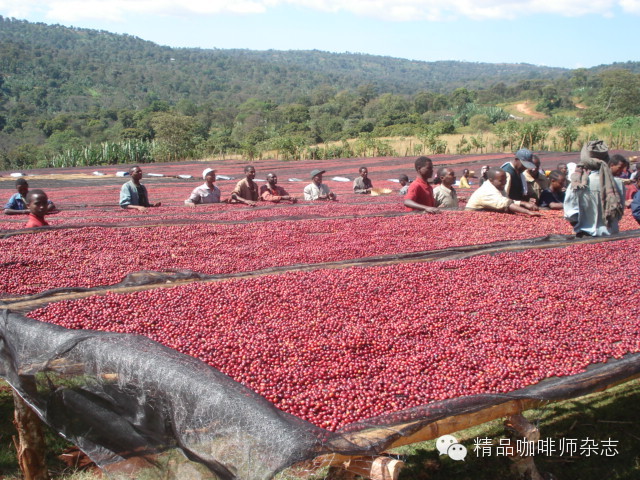
Cochel Ethiopia's famous Arabica Coffee Bean Sigiga Cooperative
Ethiopia is the birthplace of the famous Arabica coffee beans, and people have always maintained the tradition of harvesting wild coffee beans. The coffee garden at an altitude of more than 1500 meters has formed a unique coffee style after thousands of years of evolution and adaptation. Ethiopian coffee grown in the natural wild environment is called wilderness coffee, which retains the most primitive and natural taste of coffee beans.

A brief introduction to the treatment method of grinding degree and baking degree of Columbia Huilan boutique coffee beans with soft taste
St. Augustine has a natural environment for the production of high-quality coffee, rich groundwater, fertile volcanic ash soil, suitable altitude, rich precipitation and suitable sunshine, etc., which is a very favorable environment for the production of the highest quality coffee. The brand of coffee in Huilan area is Huila, although it is easy to be confused, but if you know it is St. Augustine coffee in Huilan area,

Introduction of coffee growing environment in Rwanda with tropical climate characteristics
The characteristics of Rwandan coffee: the taste of Rwandan coffee is described as grass aroma, with tropical climate characteristics, this coffee presents a sweet fruit taste, it also makes people taste refreshing, clear, and fresh. Bourbon coffee grown in Rwanda is amazing for its sweet fruit. It is full-bodied, full-bodied, unrestrained and memorable.